How to Create a Smarter, Sustainable Home Energy System in 2025
Why a Solar Energy Hub?
Energy is at the heart of every modern household. From charging smartphones and running appliances to powering heating, air conditioning, and EVs, electricity is what keeps our daily life in motion. But as energy prices continue to rise worldwide—especially across Europe and North America—homeowners are looking for alternatives that provide both financial relief and environmental responsibility.
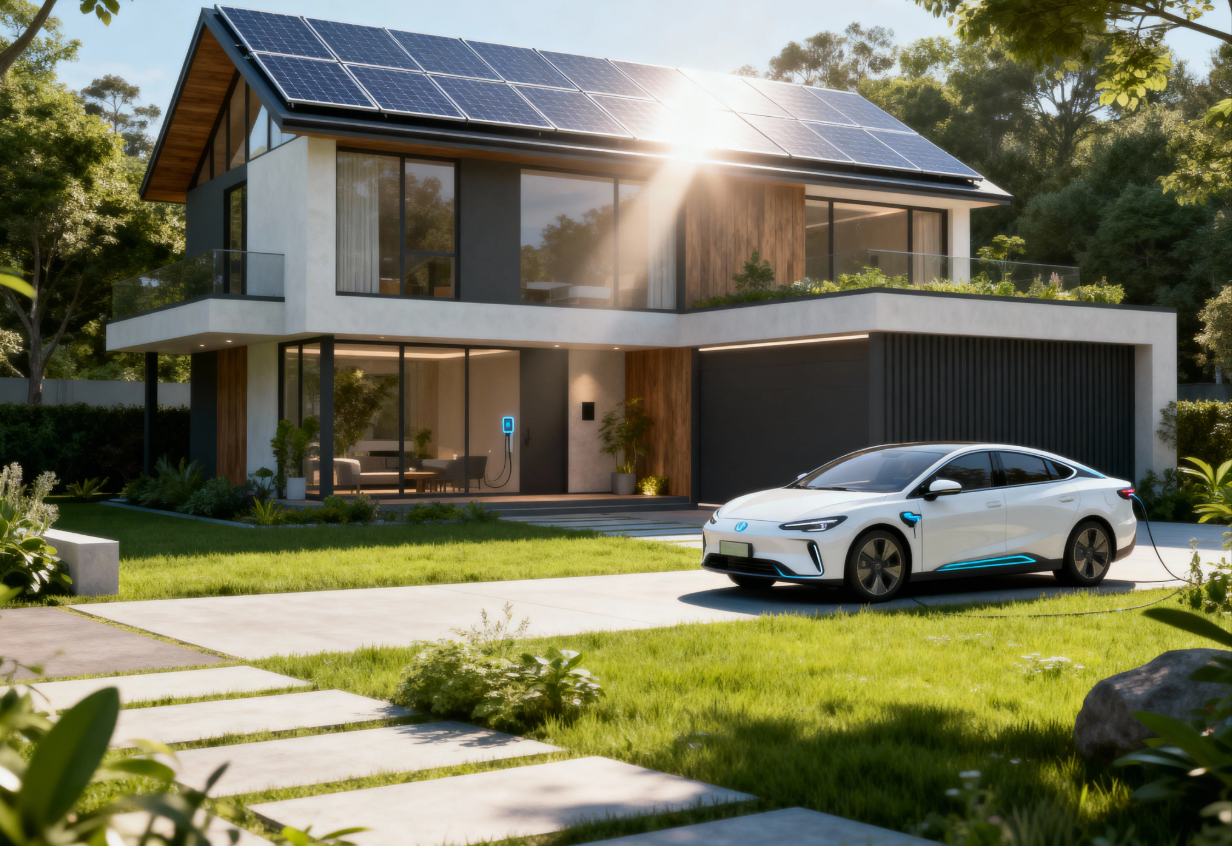
Over the past decade, the price of solar panels has dropped by nearly 80%, while the efficiency of lithium battery storage has more than doubled. This convergence has given rise to a new concept in sustainable living: the home energy hub—a system that integrates solar generation, battery storage, smart monitoring, and automation into one intelligent platform.
Instead of relying entirely on the grid, a solar-powered home energy hub lets you:
- Generate your own electricity during the day
- Store excess energy for nighttime use
- Monitor and optimize consumption in real-time
- Cut your carbon footprint dramatically
In short, you become your own micro-utility—resilient, efficient, and future-ready.
System Overview: The Components
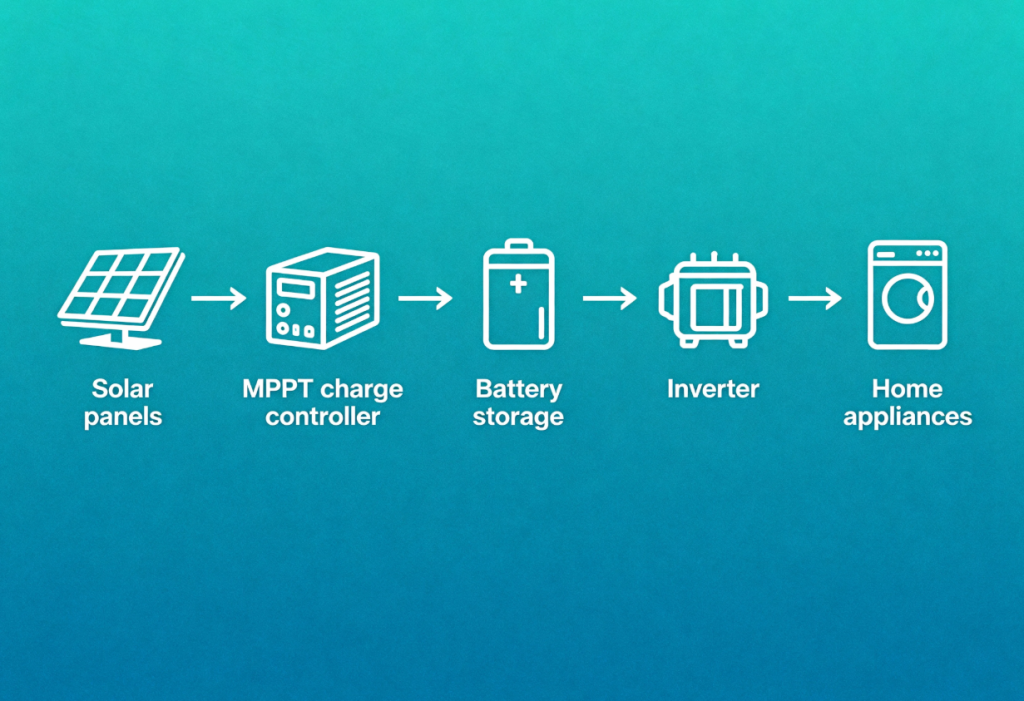
A typical solar-powered home energy hub consists of five main components working in harmony:
Solar Panels → MPPT Charge Controller → Battery Pack → Inverter (DC/AC) → Home Appliances1. Solar Panels
Solar panels are the primary energy harvesters. They convert sunlight into direct current (DC) electricity using photovoltaic (PV) cells. For residential setups, monocrystalline panels are often preferred due to their higher efficiency (20–23%) and compact size.
Key metrics to look for include:
- Wattage (W): Total power output under standard conditions.
- Efficiency (%): Energy conversion rate from sunlight to electricity.
- Temperature coefficient: Determines how much performance drops on hot days.
2. MPPT Charge Controller
An MPPT (Maximum Power Point Tracking) controller ensures that the solar panels operate at their optimal voltage and current, maximizing energy harvest—especially during variable sunlight conditions. High-end MPPTs can increase yield by 15–25% compared to basic PWM units.
3. Battery Pack
Batteries are the heart of your energy hub. They store excess electricity for use when sunlight is unavailable.
Modern systems use LiFePO₄ (Lithium Iron Phosphate) chemistry, valued for its long cycle life (3000–5000+ cycles) and excellent thermal stability.
For small homes, a 5–10 kWh battery bank typically provides 6–12 hours of autonomy.
4. Inverter
The inverter converts stored DC power into alternating current (AC) that standard household devices can use.
- Pure sine wave inverters are recommended for sensitive electronics.
- Many modern inverters also include built-in monitoring, Wi-Fi modules, and grid-tie options.
5. Smart Monitoring System
This is what makes your system “intelligent.” Using a dashboard or app, you can:
- Track solar generation, consumption, and battery status
- Set automation triggers
- Log long-term energy data
Popular platforms include Home Assistant, Victron VRM, and EcoFlow App, all supporting Wi-Fi, MQTT, or Modbus protocols for easy integration with IoT devices.
Recommended Hardware & Brands
While you can mix and match components, many users prefer integrated ecosystems from established manufacturers for better reliability and after-sales support.
Some top-rated options in 2025 include:
| Brand | Highlight Features | Ideal For |
|---|---|---|
| Jackery | Portable power stations, modular expansion, silent operation | Apartments / RV users |
| EcoFlow | All-in-one solar generators, app-based monitoring, fast charging | Small homes / hybrid setups |
| Bluetti | Large battery capacity, flexible inputs (AC, solar, car), long warranty | Off-grid houses |
| Victron Energy | Industrial-grade controllers, remote monitoring, multi-device ecosystem | Professional / high-end installations |
| Growatt / Renogy | Affordable DIY-friendly kits, excellent inverter options | Budget-conscious users |
Selecting and Sizing Components
Before purchasing, you need to size your system properly. This ensures it meets your daily energy demand without overspending.
Step 1: Calculate Daily Energy Use
List your essential appliances, their power rating (W), and usage hours per day.
| Appliance | Power (W) | Hours/Day | Energy (Wh/Day) |
|---|---|---|---|
| Refrigerator | 150 | 8 | 1,200 |
| LED Lighting | 80 | 5 | 400 |
| Laptop & Electronics | 100 | 4 | 400 |
| Washing Machine | 500 | 1 | 500 |
| Router & IoT Devices | 30 | 24 | 720 |
| Total | — | — | 3,220 Wh/day ≈ 3.2 kWh/day |
Step 2: Size the Solar Array
Formula:
Panel Power = (Daily Load ÷ Sun Hours) × 1.25
Assuming 4 peak sun hours/day:
3.2 kWh ÷ 4 × 1.25 = 1 kW solar array
Step 3: Choose Battery Capacity
You’ll want 1.5–2× your daily usage to account for cloudy days.
So: 3.2 kWh × 1.8 = 5.8 kWh recommended storage.
Step 4: Pick an Inverter
The inverter should handle your peak load with at least 25% overhead.
If your maximum simultaneous load is 1.5 kW → choose a 2 kW pure sine inverter.
| Example Setup | Solar Panels (W) | Battery (kWh) | Inverter (W) | Suitable For |
|---|---|---|---|---|
| Apartment | 600 | 3 | 1,000 | Backup & essentials |
| Small House | 1,200 | 5 | 2,000 | Daily operation |
| RV / Van | 400 | 2 | 800 | Mobile setups |
| Family Home | 2,400 | 10 | 3,000 | Full home independence |
Assembly and Integration
Wiring & Safety
Building a solar hub isn’t complicated, but electrical safety is non-negotiable.
- Use solar-rated DC cables (e.g., 10 AWG or thicker for long runs).
- Install MC4 connectors and inline fuses between major components.
- Add a DC breaker box for protection and isolation.
- Label all wires clearly; polarity mistakes can damage hardware.
If you’re not experienced with electricity, have a certified electrician verify your work.
Monitoring Integration
Once your core system is wired, add monitoring through:
- Home Assistant: Open-source automation platform that supports MQTT, Modbus, Zigbee, and Wi-Fi integrations.
- Victron VRM: A robust cloud dashboard for detailed performance analytics.
- Node-RED: For visual automation workflows (e.g., “if battery < 30%, turn off EV charger”).
These tools not only visualize data but allow deep automation logic—turning your power system into a responsive energy network.
Automation and Optimization
A solar-powered home energy hub truly shines when it’s automated.
Here’s how to make it smart, adaptive, and efficient:
1. Intelligent Load Management
- Schedule energy-heavy appliances like washing machines during solar peak hours (10:00–15:00).
- Use smart plugs to control non-critical loads based on battery percentage.
- Prioritize charging EVs only when the solar output exceeds household demand.
2. Peak Shaving & Time-of-Use Optimization
If your inverter supports grid-tie or hybrid mode, you can save by:
- Charging batteries during off-peak grid hours.
- Discharging during high-tariff periods.
This strategy—called peak shaving—can cut grid bills by up to 30%.
3. Smart Home Integration
Integrate with HomeKit, Alexa, or Google Home for voice control and automation scenes:
“Alexa, enable Eco Mode” → turns off heavy appliances, adjusts lighting, and enables energy-saving settings.
4. Predictive Energy Management
Advanced setups use AI forecasting to predict:
- Next day’s sunlight (based on weather data)
- Battery charge needs
- Optimal times to run heavy loads
Platforms like Victron Cerbo GX or Home Assistant Energy Dashboard now offer this level of intelligence natively.
Case Study: A Small Urban Home in Berlin
Scenario:
A two-person apartment in Berlin aiming to reduce grid dependence.
Setup:
- 1.2 kW solar array (4 × 300W panels)
- 5 kWh LiFePO₄ battery
- 2 kW inverter (hybrid type)
- EcoFlow Delta Pro for modular backup
Results:
- 65–75% reduction in grid energy use
- Full-day autonomy during spring/summer
- ROI achieved in ~6 years at current tariffs (€0.38/kWh)
- Annual CO₂ reduction: ~1.5 tons
User Insight:
“What surprised me most wasn’t just the savings—it was how much control I suddenly had. Watching my system in real time turned energy into a tangible, manageable resource.”
Cost, ROI & Sustainability Impact
Estimated Costs (2025)
| Component | Typical Cost (USD) | Lifespan |
|---|---|---|
| Solar Panels (1.2 kW) | $700–$1,200 | 25+ years |
| MPPT Controller | $150–$400 | 10 years |
| Battery Pack (5 kWh) | $2,000–$3,000 | 10–15 years |
| Inverter | $500–$1,000 | 10 years |
| Monitoring Hardware | $100–$300 | — |
| Total | $3,500–$5,500 | — |
Average households can expect:
- Energy bill savings: $600–$1,000 per year
- Payback period: 5–7 years
- CO₂ reduction: 1–2 tons/year (depending on grid intensity)
Over a 20-year lifetime, a small solar hub could offset 25–35 tons of CO₂—equivalent to eliminating the emissions of an average car for six years.
Future Upgrades
As renewable technology matures, your solar hub can evolve into a multi-source hybrid energy system:
Wind + Solar Hybridization
Adding a compact vertical-axis wind turbine (VAWT) provides night-time generation. Wind speeds of 5–7 m/s can supplement 20–30% of total energy.
Vehicle-to-Home (V2H) Integration
Electric vehicles (EVs) are no longer just transport—they’re mobile batteries.
V2H technology allows bi-directional charging, so your car can power your home during outages or peak hours. Brands like Nissan, BYD, and Tesla are already supporting this in 2025.
Microgrid Connectivity
Neighborhood solar hubs can interlink to form community microgrids, sharing surplus power locally. Some pilot projects in Denmark and California show up to 40% higher efficiency through peer-to-peer energy exchange.
AI-Driven Optimization
Emerging systems use predictive algorithms to:
- Adjust inverter behavior in real-time
- Balance grid export/import intelligently
- Forecast energy demand by season or habit
As machine learning integrates deeper into consumer tech, expect your solar hub to think like an energy manager, not just act like a battery.
The Broader Impact: Beyond Cost Savings
Transitioning to a solar-powered energy hub has benefits that extend beyond personal economics:
- Energy Independence: Less vulnerability to geopolitical price shocks or grid outages.
- Resilience: Power security during storms or blackouts.
- Decentralization: Contributing to grid stability by reducing peak demand.
- Sustainability: Lower lifetime emissions and reduced reliance on fossil fuels.
- Empowerment: Turning consumers into “prosumers”—producers + consumers of clean energy.
The cultural shift is profound. As more homes adopt these systems, energy production becomes democratized—a shared civic responsibility rather than a corporate monopoly.
Building the Future, One Roof at a Time
The solar-powered home energy hub is no longer a futuristic dream—it’s a practical reality. With affordable hardware, modular setups, and open-source monitoring tools, even small households can now achieve partial or full energy independence.
By blending DIY innovation, smart automation, and sustainable technology, we can redesign the relationship between our homes and the planet. Every rooftop becomes a generator, every household a node in a global clean-energy network.
In 2025 and beyond, the question isn’t whether to go solar—it’s how intelligently you can do it.
About the Author