
The Age of Modern Technology: Transforming Our World
In the heart of a bustling metropolis, skyscrapers glint under the sun, each building a testament to human innovation. Below, self-driving cars glide silently along streets, while drones hum overhead, delivering packages with pinpoint accuracy. Inside laboratories, scientists manipulate strands of DNA, programming biological systems to combat diseases once thought incurable. Across the globe, satellites orbit silently, providing instant connectivity to billions of devices. This is the age of modern technology—a world where the impossible seems routine, and the future unfolds faster than our imagination.
Modern technology no longer resides in laboratories or restricted industrial complexes. It permeates every aspect of human life, reshaping communication, healthcare, transportation, and even the way we think. Artificial intelligence algorithms predict our preferences before we consciously recognize them. Quantum computers promise to solve problems that would take classical computers millennia. Renewable energy technologies are challenging fossil fuels, promising a more sustainable future. Yet, alongside these advancements lie profound ethical, social, and economic challenges, demanding careful consideration and responsible stewardship.
The purpose of this article is not merely to enumerate technological innovations but to explore their implications, their transformative power, and the profound ways they are reshaping society. From the rise of AI-driven industries to the exploration of outer space, this journey delves deep into the innovations that define our era. Along the way, we will examine real-world examples, analyze emerging trends, and consider both the promises and perils of a world increasingly driven by technology.
AI Applications Across Industries
| Industry | AI Application | Impact |
|---|---|---|
| Healthcare | Medical Imaging & Diagnosis | Faster, more accurate diagnosis; personalized treatment |
| Finance | Fraud Detection & Risk Analysis | Reduces financial losses; predictive market insights |
| Transportation | Autonomous Vehicles | Safer roads; optimized traffic flow |
The Information Technology Revolution: Redefining Possibilities
The twenty-first century has been marked by a relentless surge in information technology, transforming the way societies function, economies grow, and individuals interact. Unlike previous industrial revolutions, which were driven primarily by mechanical innovation, this new era pivots on the intangible yet immensely powerful force of data. From the rise of artificial intelligence (AI) and machine learning to the proliferation of cloud computing and quantum technologies, information technology now underpins almost every facet of modern life.

At the core of this revolution lies artificial intelligence, which has progressed from theoretical concepts to practical implementations that influence millions of lives daily. AI systems now diagnose medical conditions with remarkable accuracy, optimize supply chains, automate customer service, and even compose music or generate art. These advancements are powered by machine learning models that can process vast amounts of structured and unstructured data, discerning patterns and trends invisible to the human eye.
Consider the healthcare sector, where AI algorithms analyze medical imaging to detect anomalies like tumors at stages far earlier than conventional methods. In finance, machine learning models identify fraudulent transactions in real-time, minimizing losses and securing global financial networks. Retail industries leverage AI to predict consumer behavior, optimize inventory, and deliver personalized shopping experiences, often before the consumer consciously realizes their own needs. The sheer pervasiveness of AI illustrates a profound paradigm shift: intelligence is no longer exclusively human—it can now be algorithmically simulated, amplified, and applied at scales previously unimaginable.
Cloud computing complements AI by providing the infrastructure necessary for storing and processing enormous data volumes. Enterprises no longer rely solely on physical servers; instead, they utilize distributed cloud networks, enabling seamless access, collaboration, and scalability. This paradigm empowers startups and multinational corporations alike to deploy services globally, often in real-time, without the need for massive capital expenditure. Furthermore, cloud-based platforms accelerate innovation, allowing teams to experiment with complex AI models or simulate computationally intensive scenarios that would have been impossible a decade ago.
Yet, even as cloud computing democratizes access, quantum computing promises to redefine computational possibilities entirely. Unlike classical computers, which process information in binary bits, quantum computers operate using qubits, which can exist simultaneously in multiple states due to superposition. This characteristic allows quantum machines to perform calculations at speeds exponentially faster than traditional computers for specific problem sets. While still in early stages, breakthroughs in quantum algorithms and error correction have demonstrated potential in areas such as cryptography, molecular modeling, and financial optimization. The implications extend beyond science; quantum technology could reshape industries, redefine national security frameworks, and challenge existing paradigms of computational power.
Cloud Computing vs Quantum Computing
| Feature | Cloud Computing | Quantum Computing |
|---|---|---|
| Data Processing | Distributed, scalable | Superposition & entanglement-based |
| Speed | High, depends on network & resources | Potentially exponential for specific problems |
| Applications | Enterprise apps, SaaS, big data analytics | Cryptography, molecular simulations, optimization |
| Accessibility | Widely accessible globally | Limited, early-stage research only |
Beyond AI, cloud, and quantum, edge computing has emerged as a critical technology to reduce latency, optimize bandwidth usage, and enable real-time processing for IoT devices. Smart cities, autonomous vehicles, and industrial IoT rely heavily on edge computing, where data is processed near the source rather than in centralized servers, allowing instantaneous decision-making.
Moreover, the proliferation of open-source software and collaborative platforms has accelerated the pace of innovation. Communities worldwide contribute to shared knowledge, frameworks, and datasets, democratizing access to tools that were once exclusive to large corporations or academic institutions. This global collaboration fosters unprecedented creativity, enabling breakthroughs that combine AI, data science, and IoT technologies in novel ways.
Communication Technologies and Network Innovation: Connecting the Modern World
In an era dominated by digital interactions, communication technologies form the invisible backbone of our interconnected society. From instant messaging and video conferencing to the global Internet of Things (IoT), modern communication networks have revolutionized how humans and machines exchange information. Unlike any previous period, the speed, reliability, and ubiquity of modern networks determine not just convenience but economic competitiveness, national security, and social cohesion.
At the forefront of this transformation is 5G technology, which represents a quantum leap in wireless communication. Unlike its predecessors, 5G delivers ultra-low latency, high bandwidth, and massive device connectivity, enabling applications that were previously impossible. Autonomous vehicles rely on near-instantaneous communication with traffic infrastructure and other vehicles, ensuring safety and optimizing traffic flow. Telemedicine platforms leverage 5G to transmit high-definition medical imaging in real time, allowing specialists to diagnose patients remotely without delay. Meanwhile, augmented reality (AR) and virtual reality (VR) experiences, once limited by network constraints, are becoming immersive and practical for education, entertainment, and professional training.
Beyond 5G, researchers are already exploring 6G networks, which promise to integrate artificial intelligence directly into the communication infrastructure. 6G aims to achieve terabit-per-second speeds and near-zero latency, supporting holographic communication, advanced AI-driven data analysis at the network edge, and enhanced global coverage, including remote and underserved regions. This evolution will not only enhance individual user experience but also create new industrial ecosystems, transforming manufacturing, logistics, and public services on a global scale.
A critical complement to these developments is satellite-based Internet networks. Companies like SpaceX with Starlink, OneWeb, and Amazon’s Project Kuiper are deploying low-earth orbit (LEO) satellites to provide high-speed Internet access worldwide. This innovation bridges the digital divide, connecting rural and remote communities, enabling tele-education, telehealth, and economic opportunities in regions that were previously offline. The synergy of terrestrial 5G networks with satellite Internet creates a truly global, resilient, and high-speed digital fabric.
Global Network Coverage Overview
- 5G Networks: Urban & developed areas, covering ~60% of global population
- 6G (Research Stage): Early testing, expected 2030+ deployment
- Satellite Internet (LEO): Expanding global coverage, connecting remote & rural regions
- IoT Networks: Supporting billions of devices in smart cities, factories, & agriculture
Visualization illustrates the convergence of terrestrial and satellite networks in shaping a connected planet.
Another key innovation is the rise of IoT (Internet of Things), which integrates billions of sensors, devices, and machines into a cohesive digital ecosystem. Smart homes adjust energy consumption autonomously, industrial plants monitor machinery in real time to prevent breakdowns, and agricultural sensors optimize irrigation and crop management. The real-time collection and analysis of data enables efficiency, cost reduction, and predictive decision-making, fundamentally changing operational strategies across sectors.
Network security remains a critical challenge as communication systems grow more complex. Cybersecurity protocols, encryption techniques, and AI-driven threat detection are essential to protect sensitive information from attacks. As networks expand and become more interconnected, the potential attack surface increases exponentially, making robust defense mechanisms not just a technical necessity but a societal imperative. The integration of AI into cybersecurity allows for real-time threat identification and autonomous response, offering unprecedented resilience against cyberattacks.
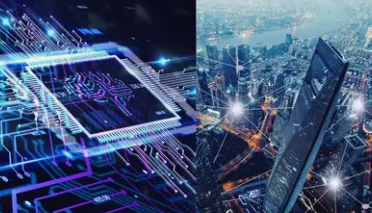
Finally, the convergence of 5G, 6G, satellite networks, and IoT points toward a future where communication networks are not just passive conduits but intelligent ecosystems. These networks will analyze data in real time, predict failures, optimize routing, and facilitate human-machine collaboration on scales never before imagined. Industries, cities, and societies will rely on these intelligent networks to function efficiently, safely, and sustainably.
Future Energy and Environmental Technology: Powering a Sustainable World
As humanity grapples with climate change, environmental degradation, and rising energy demands, technology has emerged as both a challenge and a solution. The quest for sustainable energy is no longer optional—it is a fundamental requirement for global stability and prosperity. Modern innovations in renewable energy, energy storage, and smart infrastructure are shaping a future where environmental responsibility and technological advancement coexist.
At the forefront of this revolution is renewable energy. Solar and wind power have seen exponential growth, driven by rapidly falling costs, increased efficiency, and supportive policy frameworks. Photovoltaic technologies now convert sunlight into electricity with efficiencies that were once considered unattainable, while offshore and onshore wind turbines harness kinetic energy on a massive scale. Innovations in floating solar farms and vertical-axis wind turbines expand the geographical potential for clean energy generation, making it feasible even in densely populated or resource-limited regions.
Complementing energy generation are advanced energy storage systems. Battery technologies, particularly lithium-ion and emerging solid-state designs, allow intermittent renewable sources to provide consistent power. Grid-scale storage solutions, like pumped hydroelectric systems, compressed air energy storage, and large-capacity battery farms, ensure that energy can be stored during peak production and delivered when demand spikes. These storage innovations not only stabilize energy supply but also make renewable energy economically competitive with fossil fuels, accelerating global adoption.
Renewable Energy Production Comparison
| Energy Source | Global Capacity (GW) | Growth Rate (%) | Key Advantage |
|---|---|---|---|
| Solar | 950 | 20 | Scalable, abundant |
| Wind | 700 | 15 | High energy output, low emissions |
| Hydro | 1300 | 2 | Reliable, stable supply |
| Biomass | 130 | 5 | Carbon-neutral fuel |
The table highlights global capacity and growth rates of major renewable energy sources.
In addition to production and storage, smart grid technologies are reshaping how energy is distributed and consumed. Intelligent grids employ real-time monitoring, predictive analytics, and automated controls to optimize electricity flow, reduce waste, and prevent blackouts. By integrating renewable energy sources, electric vehicles, and distributed generation, smart grids transform energy from a static commodity into a dynamic, responsive system. These grids also enable demand-side management, allowing households and industries to adjust consumption patterns based on availability and cost, further enhancing sustainability.
Environmental technologies extend beyond energy generation. Carbon capture, utilization, and storage (CCUS) technologies are emerging as crucial tools in mitigating climate change. By capturing carbon dioxide emissions from industrial processes and power plants, and either storing them underground or converting them into usable products, CCUS can significantly reduce greenhouse gas accumulation in the atmosphere. Advances in direct air capture, enhanced mineralization, and bioengineering offer promising pathways to complement renewable energy efforts.
The convergence of these innovations—renewable energy, energy storage, smart grids, and carbon mitigation—heralds a future in which humanity can decouple economic growth from environmental degradation. As technology continues to evolve, it will enable societies to not only meet their energy needs but do so in a way that preserves the planet for generations to come.
Biotechnology and Medical Innovation: Redefining Health in the Modern Era
The intersection of biotechnology and medical innovation represents one of the most transformative areas of modern technology. As populations grow and life expectancy rises, humanity faces unprecedented healthcare challenges, from chronic diseases to emerging pathogens. Modern biotechnology offers solutions that are faster, more precise, and increasingly personalized, fundamentally reshaping medicine, diagnostics, and human well-being.
At the forefront is gene editing, with technologies like CRISPR-Cas9 revolutionizing the way we understand and manipulate DNA. Once a purely theoretical concept, gene editing now enables scientists to target specific genes with unparalleled precision, potentially curing hereditary diseases such as cystic fibrosis, muscular dystrophy, and sickle cell anemia. The promise of personalized medicine, in which an individual’s genetic profile guides prevention and treatment strategies, is closer than ever. Pharmaceutical development is becoming faster and more efficient, with therapies designed to interact with specific genetic pathways, reducing side effects and improving efficacy.
Another major area is regenerative medicine, including stem cell therapy and 3D bioprinting. Stem cells, capable of differentiating into specialized cell types, allow researchers to repair or replace damaged tissues. Advances in bioprinting enable the creation of functional tissue structures, and in some experimental settings, entire organs, tailored to individual patients. Such innovations have the potential to address the global shortage of organ donors and dramatically improve outcomes for patients with severe organ failure.
Medical diagnostics have also been transformed by AI and machine learning. Algorithms now analyze medical imaging, pathology slides, and patient records with remarkable speed and accuracy. Radiologists leverage AI for early detection of tumors, cardiovascular anomalies, and neurodegenerative disorders, often identifying subtle patterns invisible to the human eye. Remote patient monitoring, wearable devices, and biosensors collect real-time health data, enabling proactive interventions and continuous management of chronic conditions such as diabetes or hypertension.
Emerging Medical Technologies
| Technology | Application | Impact |
|---|---|---|
| CRISPR Gene Editing | Targeted genetic therapies | Cures genetic diseases, personalized medicine |
| 3D Bioprinting | Tissue and organ fabrication | Addresses organ shortages, personalized implants |
| AI Diagnostics | Medical imaging and predictive analytics | Faster, more accurate diagnosis, early disease detection |
| Wearable Health Devices | Continuous monitoring of vitals | Proactive healthcare, improved chronic disease management |
This table highlights key innovations shaping the future of medicine.
In addition to clinical applications, biotechnology is fostering preventive healthcare and public health management. Predictive models, powered by AI, analyze epidemiological data to anticipate disease outbreaks and optimize vaccination strategies. Advances in bioinformatics and genomics provide insights into population health, enabling interventions tailored to specific genetic, environmental, and lifestyle factors.
Telemedicine and digital health platforms further extend the reach of modern medicine. Patients in remote or underserved regions can access specialists and receive continuous care without traveling, reducing healthcare disparities. Integration of electronic health records (EHRs) with AI-driven analytics enhances decision-making, patient safety, and treatment outcomes, while minimizing administrative burdens.
Finally, ethical considerations and regulatory frameworks play a crucial role in guiding these innovations. As gene editing, AI diagnostics, and personalized medicine become widespread, questions surrounding privacy, consent, and equitable access must be addressed. The responsible development and deployment of biotechnology are essential to ensure that technological progress translates into meaningful, ethical, and inclusive health improvements.
Automation and Robotics: Transforming Industries and Daily Life
Automation and robotics represent a cornerstone of modern technological advancement, fundamentally reshaping the way humans live, work, and interact with machines. Once confined to manufacturing lines, robotics now spans industries, from logistics and agriculture to healthcare and even domestic environments. The integration of artificial intelligence, machine vision, and advanced sensors has enabled robots to operate autonomously, collaborate with humans, and adapt to dynamic environments, marking a new era in efficiency and productivity.
Industrial automation remains one of the most visible applications of robotics. Factories worldwide employ robotic arms and automated assembly lines to perform repetitive tasks with speed and precision, reducing errors and lowering operational costs. These systems leverage machine learning to optimize production flows, predict equipment maintenance, and respond in real time to changes in supply or demand. As a result, manufacturers can maintain high-quality output while scaling operations rapidly, a critical factor in global competitiveness.
Collaborative robots, or cobots, extend automation beyond rigid factory processes. Unlike traditional industrial robots, cobots are designed to work safely alongside human operators, enhancing productivity without replacing human judgment. In logistics, for instance, cobots assist warehouse workers in sorting, packing, and moving goods efficiently, reducing physical strain and increasing throughput. In healthcare, surgical robots enable minimally invasive procedures, improving patient recovery times and precision.
Beyond industry, service and domestic robots are entering everyday life. Autonomous vacuum cleaners, lawn mowers, and companion robots provide convenience and support for daily tasks. In agriculture, robotic systems manage planting, irrigation, and harvesting with minimal human intervention, optimizing yield and reducing resource waste. Drone technology, a subset of robotics, supports applications ranging from aerial surveying and environmental monitoring to emergency response and disaster relief, demonstrating versatility across sectors.
Robotics Applications Across Industries
| Industry | Robotic Application | Impact |
|---|---|---|
| Manufacturing | Automated assembly lines | Higher efficiency, reduced errors, cost savings |
| Healthcare | Surgical robots & rehabilitation devices | Improved precision, faster recovery, enhanced patient care |
| Agriculture | Autonomous harvesting & monitoring | Optimized yield, reduced labor, resource efficiency |
| Logistics | Warehouse sorting & delivery drones | Faster processing, reduced human strain, scalable operations |
This table illustrates the diverse applications of robotics across multiple industries.
As robotics continue to evolve, autonomous systems are becoming increasingly sophisticated. AI-powered robots now perceive their environment using advanced sensors, lidar, and computer vision, enabling dynamic decision-making and adaptability. This capability extends to self-driving vehicles, drone fleets, and mobile delivery robots, which navigate complex environments with minimal human supervision. The combination of AI and robotics accelerates innovation, driving productivity while opening new possibilities for human-robot collaboration.
However, the rise of automation also raises social and ethical considerations. Job displacement, workforce retraining, and equitable access to robotic technologies are pressing concerns. Policymakers and industry leaders must balance efficiency gains with societal impacts, ensuring that automation benefits humanity as a whole rather than exacerbating inequality. Responsible development, transparent AI governance, and continuous ethical evaluation are essential to sustainable robotics integration.
The integration of automation and robotics into both industrial and daily life marks a pivotal moment in technological history. As these systems become smarter, safer, and more versatile, the line between human and machine labor blurs, creating new opportunities for productivity, innovation, and quality of life.
Future Transportation and Space Technology: Exploring New Frontiers
Transportation and space technology have always been catalysts for human progress, pushing the boundaries of possibility and connecting people across continents and, increasingly, across planets. Modern innovations in electric vehicles, autonomous systems, hyperloop concepts, and private space exploration are redefining mobility, logistics, and humanity’s role in the cosmos.

In the realm of ground transportation, electric vehicles (EVs) are leading a revolution in sustainable mobility. Advances in battery technology, such as high-capacity lithium-ion and emerging solid-state batteries, allow EVs to travel longer distances with faster charging times, reducing reliance on fossil fuels. Global adoption is accelerating, driven by government incentives, environmental regulations, and a cultural shift toward sustainability. Autonomous driving systems complement this transition, using AI, lidar, and real-time data analysis to navigate roads safely, optimize traffic flow, and reduce accidents caused by human error.
High-speed transportation concepts like the Hyperloop and maglev trains offer a glimpse into the next era of mass transit. By minimizing friction through magnetic levitation and vacuum-sealed tubes, these systems can achieve unprecedented speeds, shrinking travel times between cities and revolutionizing logistics. While still in experimental stages, these technologies promise to redefine the global movement of people and goods, enabling faster, more efficient, and environmentally friendly transit.
Future Transportation & Space Exploration
| Technology | Current Status | Impact / Potential |
|---|---|---|
| Electric Vehicles (EVs) | Mass adoption underway, improving battery tech | Reduced emissions, sustainable mobility |
| Autonomous Vehicles | Testing in urban environments | Safer roads, optimized traffic, new transport models |
| Hyperloop & Maglev | Experimental, pilot projects in development | Ultra-fast travel, reduced transit times, economic growth |
| Private Space Exploration | Operational launches by SpaceX, Blue Origin, etc. | Space tourism, satellite deployment, Mars exploration |
Visualization of key innovations shaping transportation and space exploration.
Space technology has also seen unprecedented private sector involvement. Companies like SpaceX, Blue Origin, and Virgin Galactic have reduced the cost of launches, enabling satellite deployment, space tourism, and even plans for Mars colonization. Reusable rocket technology and miniaturized satellites allow rapid iterations of experiments, bringing space closer to commercial and scientific applications. International collaboration, combined with private innovation, is accelerating the pace of exploration, from lunar bases to interplanetary research.
Satellite networks not only enable global Internet connectivity but also enhance navigation, climate monitoring, disaster response, and Earth observation. High-resolution imaging and sensor networks allow scientists to track environmental changes, monitor agricultural productivity, and detect natural disasters in near-real time, illustrating the profound societal benefits of space-based technology.
Finally, the integration of AI, robotics, and automation in space exploration allows autonomous spacecraft and rovers to perform complex missions with minimal human intervention. AI-driven navigation, system management, and problem-solving enable long-duration missions to distant planets, where communication delays make real-time human control impossible.
The convergence of advanced transportation technologies and space exploration marks a transformative chapter in human history. By reimagining mobility on Earth and extending our reach into space, modern technology not only solves practical challenges but also inspires a new vision of human potential and interplanetary collaboration.
Social Impact and Ethical Considerations: Navigating the Human Dimension of Technology
As modern technology permeates every aspect of life, its influence extends far beyond engineering and innovation. While technological progress drives efficiency, convenience, and discovery, it simultaneously presents profound social, ethical, and philosophical challenges. Understanding and managing these implications is essential to ensure that technology serves humanity rather than undermines it.
One major area of concern is privacy and data security. The rise of AI, IoT devices, cloud computing, and pervasive surveillance systems has created unprecedented access to personal and sensitive information. While these technologies enable personalized services, predictive analytics, and convenience, they also pose risks of misuse, identity theft, and manipulation. Societies must develop robust legal frameworks, encryption standards, and AI governance protocols to safeguard individual privacy and ensure responsible data stewardship.
Job displacement and workforce transformation represent another critical challenge. Automation, robotics, and AI are reshaping labor markets, reducing the demand for routine and repetitive tasks while creating opportunities in emerging sectors. Workers in traditional industries may face unemployment or require reskilling, raising questions about economic inequality, social stability, and access to education. Policymakers and industry leaders must balance technological efficiency with equitable workforce strategies, investing in lifelong learning programs and social safety nets to mitigate disruption.
Social Impacts of Modern Technology
| Impact Area | Description | Implications |
|---|---|---|
| Privacy & Data Security | Widespread collection of personal data | Need for encryption, legal frameworks, AI governance |
| Job Displacement | Automation of repetitive tasks | Reskilling, workforce retraining, social equity programs |
| Ethical AI | Decision-making by algorithms | Bias mitigation, transparency, accountability |
| Digital Divide | Unequal access to modern technologies | Inclusive policies, infrastructure investment, global access |
This table highlights the key social and ethical dimensions of modern technology.
Another critical dimension is ethical AI and algorithmic accountability. As AI systems increasingly influence healthcare, finance, law enforcement, and social media, decisions previously made by humans are now automated. Without transparency, bias detection, and fairness mechanisms, these systems risk reinforcing existing inequalities or generating unintended consequences. Ethical frameworks, multidisciplinary oversight, and ongoing monitoring are essential to ensure AI aligns with societal values and human rights.
Digital equity is equally important. While some regions enjoy ubiquitous high-speed connectivity, others remain offline, exacerbating educational, economic, and social disparities. Bridging the digital divide requires international collaboration, infrastructure investment, and inclusive policies to ensure equitable access to the benefits of technology.
Finally, technology affects psychological, cultural, and social dynamics. Social media, immersive gaming, and constant connectivity reshape interpersonal relationships, attention spans, and cultural norms. While these tools can foster global collaboration and creativity, they also challenge mental health, privacy, and social cohesion. Awareness, responsible usage, and technological literacy are vital to maximizing positive outcomes while minimizing societal harm.
The social and ethical implications of technology remind us that innovation is not value-neutral. Modern advancements must be evaluated not only for efficiency or profitability but also for their impact on human dignity, equality, and the sustainability of social structures. By integrating ethical principles, inclusive policies, and societal foresight, humanity can harness technology responsibly, shaping a future that empowers individuals and communities alike.
Artificial Intelligence and Future Trends: Charting the Next Frontier
As the twenty-first century progresses, artificial intelligence (AI) stands as the central pillar of technological evolution. AI’s integration into industries, healthcare, transportation, energy, and social systems is not only reshaping existing paradigms but also defining the trajectory of human progress. Understanding AI’s current impact and anticipating future trends is essential to navigate an era of rapid technological transformation.
AI’s present influence spans multiple sectors. In healthcare, AI accelerates diagnostics, personalizes treatment, and streamlines hospital operations. In finance, predictive analytics, fraud detection, and automated trading are reshaping markets. Autonomous vehicles, drones, and robotics are redefining mobility and manufacturing. Moreover, AI-driven content creation, from music to visual arts, is challenging traditional notions of creativity and human uniqueness. These applications exemplify how AI enhances productivity, efficiency, and decision-making while simultaneously raising ethical, social, and legal questions.
Looking forward, AI is poised to converge with other emerging technologies, amplifying its capabilities. Quantum computing, for instance, will enable AI models to process exponentially larger datasets at unprecedented speeds, unlocking solutions for complex problems in climate modeling, molecular biology, and global logistics. Biotechnology combined with AI will accelerate drug discovery, optimize genome editing, and facilitate personalized medicine on a scale previously unimaginable. In energy and environmental management, AI will optimize smart grids, renewable energy allocation, and carbon capture strategies, advancing sustainability initiatives worldwide.
Future Technology Trends Overview
| Trend | Emerging Application | Potential Impact |
|---|---|---|
| AI + Quantum Computing | Complex problem-solving, accelerated simulations | Breakthroughs in drug discovery, climate modeling, logistics optimization |
| AI + Biotechnology | Genome editing, personalized medicine | Targeted therapies, improved healthcare outcomes |
| Autonomous Systems | Self-driving vehicles, industrial robots, drones | Enhanced efficiency, safety, productivity |
| Smart Infrastructure | Smart grids, IoT-enabled cities | Sustainability, optimized energy use, improved urban living |
| AI Ethics & Governance | Fair, transparent, accountable AI systems | Responsible adoption, minimized societal risks |
This table illustrates emerging AI-driven trends shaping the future of technology across sectors.
In conclusion, AI represents both the engine and the lens through which the future of technology can be envisioned. By integrating AI with emerging fields—quantum computing, biotechnology, autonomous systems, and smart infrastructure—humanity stands on the brink of an era defined by unprecedented opportunity and responsibility. The trajectory of AI and its complementary technologies will shape not just industries and economies but the very nature of human experience, demanding foresight, collaboration, and ethical stewardship.
About the Author