The curved trousers are not just a trendy style, but a crossroads of contemporary tailoring and identity narratives: they redefine leg proportions, confidence in wearing clothes, and the boundaries between work and leisure with 'curved straight lines'—while reflecting multiple issues of globalized clothing aesthetics, body politics, and sustainable manufacturing.
On an early autumn morning, on the platform of the E line of the New York subway, the air was filled with the scent of coffee beans and cool air. An advertising creative girl, clutching a laptop and wearing AirPods, had a pair of dark indigo scalloped jeans at her feet, the curved hem creating an “off-line arc” as she stepped towards the train door. A few minutes later, at the Lafayette intersection in Soho, a Scandinavian model shooting a lookbook wore square-toed loafers and all-black scalloped trousers, while a photographer kept pressing the shutter button beside her. And in the afternoon at FiDi in San Francisco, a product manager in his thirties, wearing wool-blend scalloped trousers, pushed a stroller across a zebra crossing, holding a cold brew in one hand and pressing the traffic light with the other; the flared shape of the trouser hem appeared both soft and decisive in the California sunlight.
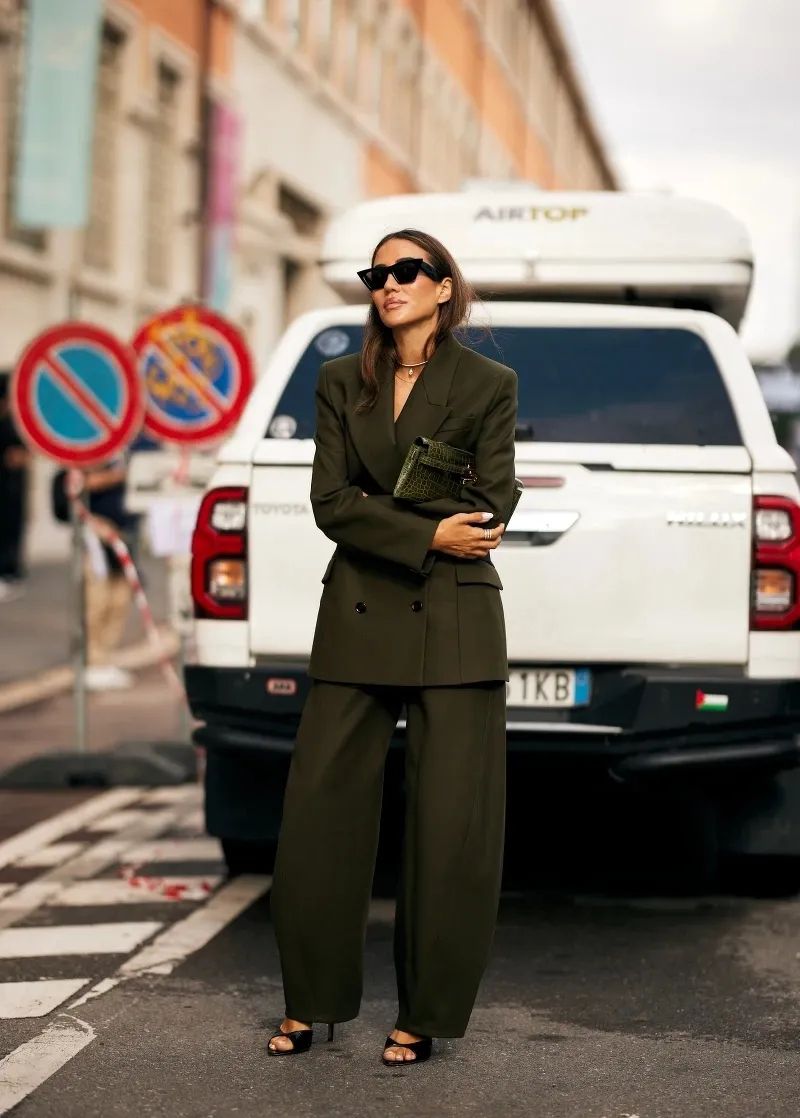
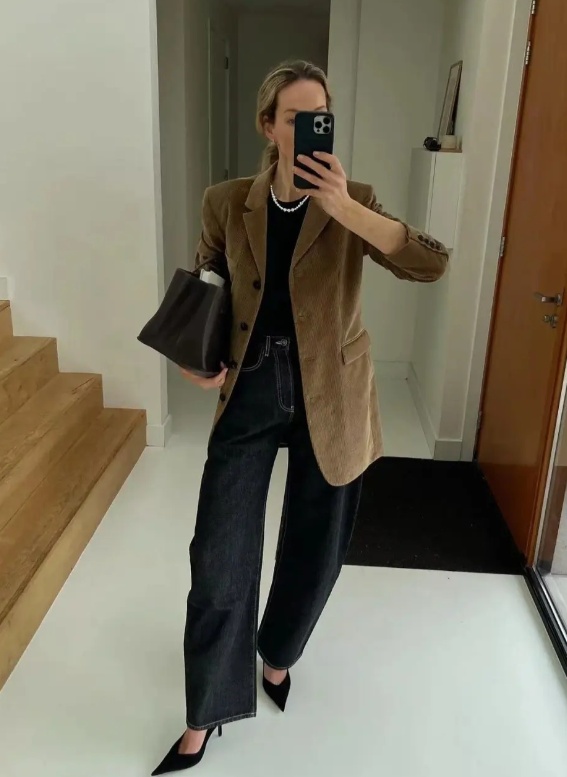
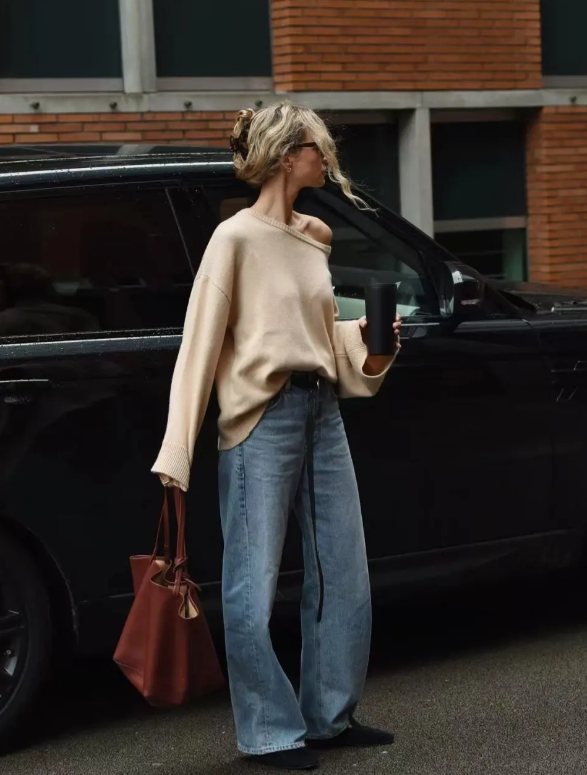
Three seemingly unrelated moments in time are connected by an invisible thread: people of different ages, professions, and cities—all in the same season—choose the same non-linear pant silhouette. The rise of this curved pant in 2025 isn’t just “another viral piece”; it represents a triumph of translating three-dimensional tailoring experiments into everyday wear.
Product Deep Dive: What Exactly Are “Curved Blade Pants”?
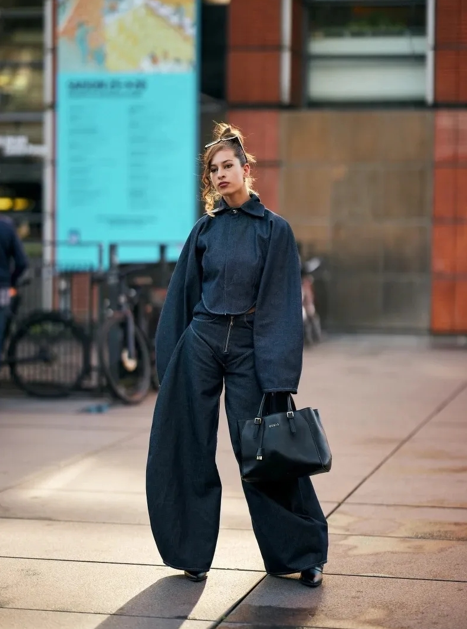
Strictly speaking, curved blade pants aren’t just “a quick tweak to a wide-leg pant.” The real surgical point is the mid-thigh—not the crotch, not the hem. The curve starts at mid-thigh, gently tapers at the knee, then flares out again at the calf. This two-stage curvature is the essence.
In pattern-making terms, it’s a true 3D construction: the pattern isn’t simply two flat pieces sewn along the side seam. You actually “take in” some of the mid-thigh straight-line baseline so the fabric forms a subtle shadow at the knee, creating a line that reads like it’s straight in motion. That’s the core: a curve that tricks the eye into reading as straight.
Put it next to other familiar silhouettes, and the difference is clear:
- Straight-leg stays evenly wide all the way down.
- Wide-leg expands its volume uniformly.
- Flares only open up below the knee.
- Tapered pants narrow from hip to hem.
Curved blade pants are counterintuitive: the drama is in the midsection. It’s not at the hem where you expect the flair—it’s a targeted intervention on the thigh.
Why do they make your legs look longer? It’s not magic—it’s physics and visual psychology. That mid-thigh curve visually “resegments” the leg. Our eyes ignore short or weaker points and naturally follow that seemingly straight-but-not-straight line. The slimming effect isn’t about tightness—it’s about creating a “false straight line.” And that false straight line? That’s the truest, most sophisticated detail of Fall/Winter 2025: not that you’ve changed—it’s that your proportions have been quietly, intelligently reworked.
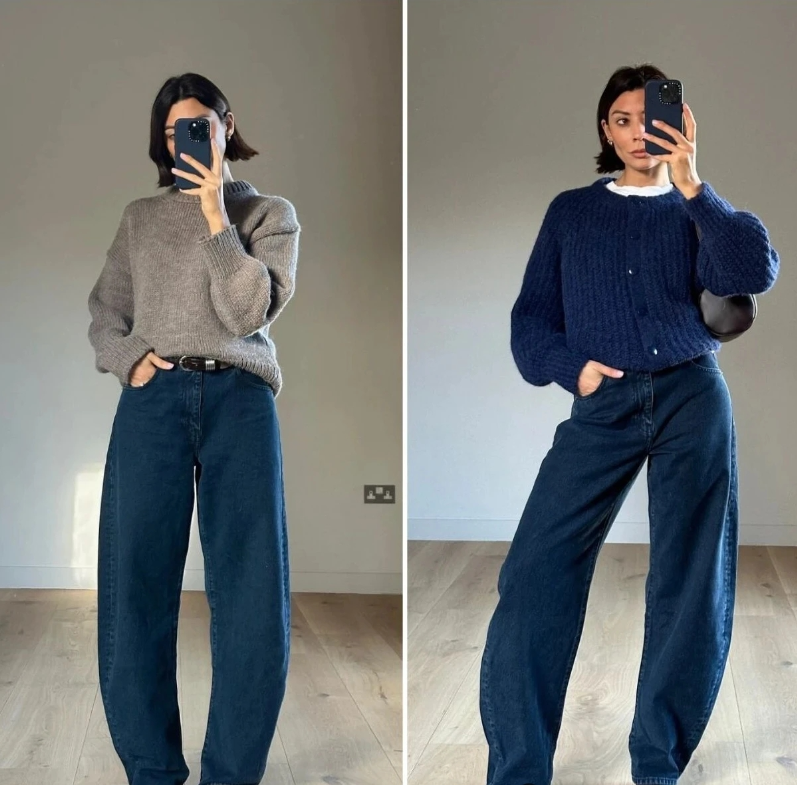
Aesthetics and Body Politics: How Curved Blade Pants “Optimize” Perception
The “looks slimmer, looks longer” effect of curved blade pants isn’t magic—it’s a quirk of visual perception. When a line isn’t perfectly straight but only subtly curved—say, within 8–12°—the human eye often misreads it as still generally straight, mentally extending it along its trajectory. Curved blade pants exploit this optical illusion: the mid-thigh curve along the outer leg acts like a “visual guide rail.”
Add in a slight taper at the knee—like nudging a curve anchor in design software—and the fabric naturally gathers shadows between the knee and hem. These areas of “darkness” paradoxically make the middle portion of the leg appear clean, elongated, and uninterrupted. In other words, curved blade pants don’t make legs slimmer—they make the eye perceive them as straighter and longer.
This is why the silhouette works especially well for “imperfect” leg types. For O-shaped legs, which flare outward, the outer curve plus mid-thigh taper visually harmonizes the line. For X-shaped legs, where the knees converge, the outward curve redirects focus to the leg’s outer edge. For those with wider hips (especially with fat accumulation on the outer glutes, broad pelvis, and narrow thighs), volume only starts at mid-thigh, balancing proportions so the hips are no longer the “center of attention.” This isn’t about hiding—it’s about redistributing weight. Not about covering—it’s about redefining where light and shadow fall.
In fact, this touches on a thornier topic: body politics. We’re not here to tell consumers they’re “not enough.” Yet we have to acknowledge that the modern fashion system is full of “shame logic,” constantly issuing directives to “optimize” the body. The popularity of curved blade pants reveals something new: mainstream aesthetics are translating “Photoshop-style line adjustments” into real-world tailoring, using 3D cuts to reconstruct self-perception. These pants can help some people feel more comfortable psychologically, but their true value isn’t about making the body conform to a standard. It’s about allowing the body, in its real state, to look like it doesn’t need to be hidden—or explained.
If we’re to praise curved blade pants honestly, the statement should be:
They don’t make the body “correct.”
They give the body more space to look okay as it is.
Styling Versatility: From Office to Weekend with Curved Blade Pants
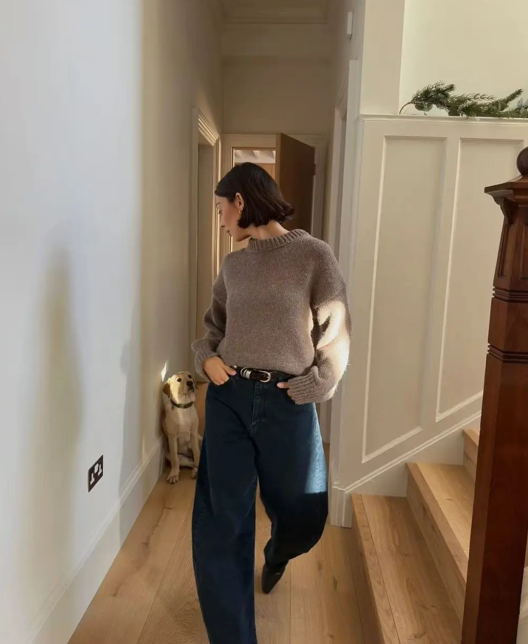
Styling Versatility: From Office to Weekend with Curved Blade Pants
Curved blade pants on the autumn streets aren’t just a single item—they’re a “versatile stage,” capable of effortlessly shifting styles from the office to a weekend brunch.
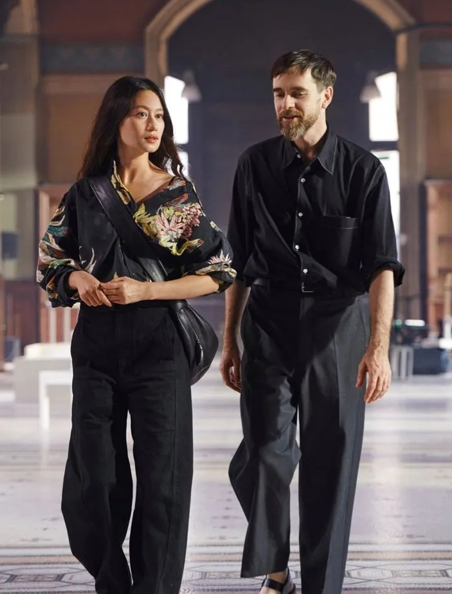
Take an all-black professional look: a black printed shirt paired with black curved blade pants, finished with square-toe loafers. The outfit keeps the sharpness of office attire while adding a subtle edge through the print and the pants’ curved silhouette. Perfect for creative professionals in New York or LA, and with a small tweak—like swapping in a metallic belt or rolling up the shirt sleeves—the outfit instantly feels more powerful.
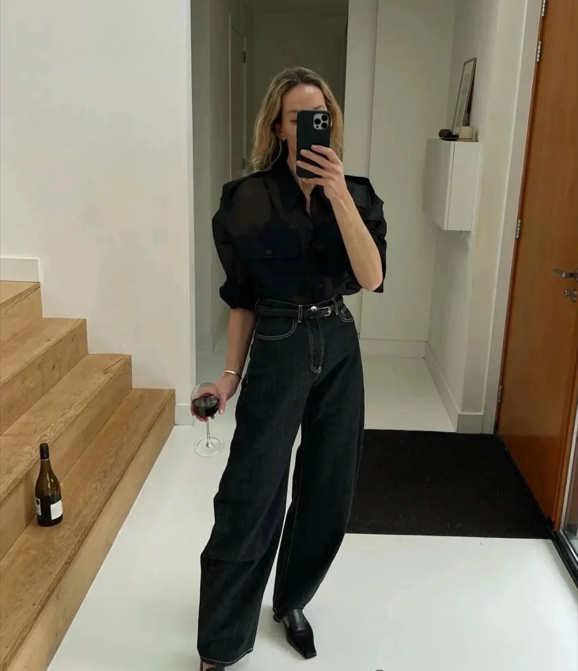
For a vintage-commute aesthetic, it’s all about the details: a semi-sheer double-pocket shirt with denim curved blade pants, cinched with a slim belt, and brown square-toe loafers. The result is retro yet refined, ideal for coffee shops or morning meetings in San Francisco or Boston. Small tweaks—switching striped socks or adding a subtle shine to the loafers—modernize the vintage vibe.
Casual layered looks allow for more daring combinations: a loose light-gray T-shirt over a striped shirt, paired with plaid curved blade pants, and finished with red heels. The wide top balances the pants’ structure, while the red shoes break up the muted palette—perfect for weekend dates or museum strolls. Leaving the shirt partially unbuttoned or adding a slim scarf boosts the sense of layering.
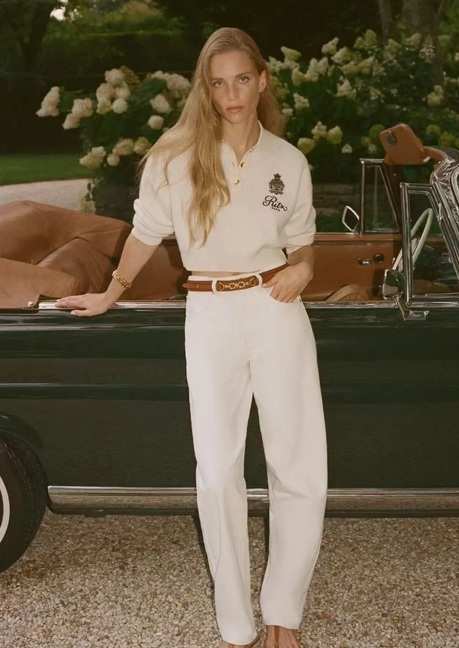
Minimalist monochrome outfits also shine: a white long-sleeve polo with white curved blade pants, accented by a slim brown belt at the waist and brown slide sandals for relaxed fall vibes. Ideal for California weekend getaways or early autumn East Coast walks. Swap in white sneakers, and the look shifts to urban casual.
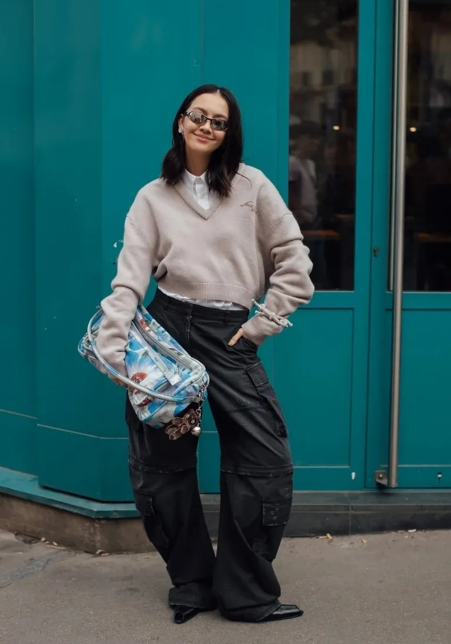
For late-fall warmth, focus on comfort and texture: a light coffee or gray sweater with denim curved blade pants, finished with black loafers or split-toe shoes. Soft fabrics and warm tones make this suitable for chilly Chicago or Portland days while keeping an office-ready polish. To add a touch of subtle allure, try a beige off-shoulder sweater—the exposed shoulder line contrasts with the crisp denim, combining warmth with casual chic.
These outfits aren’t just style statements—they showcase the adaptability of curved blade pants. Across occasions, body types, or seasons, they find their place with just a few thoughtful tweaks to detail.
Manufacturing, Market, and Sustainability: The Craft and Culture Behind Curved Blade Pants
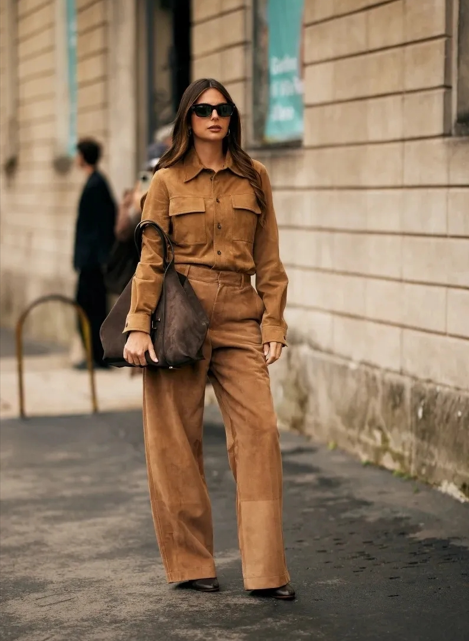
The appeal of curved blade pants lies not only in their cut, but in how materials and craftsmanship translate a pattern’s conceptual design into reality. Fabrics suited for this silhouette need to balance structure and flexibility—medium-weight denim, twill cotton, or stretch wool blends are ideal. Fabrics that are too stiff make the curves rigid and restrict movement; fabrics that are too soft collapse, erasing the carefully engineered mid-thigh “pivot.” To maintain the signature “narrow top, cinched mid, flared lower” shape, designers slightly expand the pattern at the mid-thigh, taper at the knee, and allow the hem to flare naturally with movement. This 3D tailoring is not only an art of visual language but a precise command of the material’s physical properties.
It’s this meticulous design and craftsmanship that has made curved blade pants a street-style favorite across Europe and North America this fall. Social media and street-style culture have accelerated their spread: in Soho, New York, an Instagram snap by a fashion blogger instantly draws attention to the pants’ curve and leg-lengthening effect; on TikTok, fast-paced short videos make the “curved 3D cut” a hot topic among young trendsetters. Meanwhile, the revival of vintage and workwear aesthetics has created fertile cultural ground. Denim curved blade pants paired with plaid shirts or striped tees balance Nordic minimalism with East Coast urban retro, seamlessly fitting office commutes, coffee shop outings, and weekend street-style looks. In the post-pandemic era, garments that combine comfort with style are increasingly valued—curved blade pants perfectly suit the hybrid reality of returning to the office, casual street activity, and leisure outings.
Yet this trend also raises questions around sustainability and ethical consumption. Rapid virality and high turnover make curved blade pants a target for fast-fashion brands; if production is poorly managed, fabric waste and short-term wear increase environmental impact. Selecting curved blade pants, therefore, should go beyond cut and design, emphasizing fabric origin and craftsmanship: boutique factories, high-quality denim or wool blends, and durable or repairable finishes all extend the garment’s lifespan. The true value lies not in “chasing trends,” but in marrying design with responsible consumption—turning curved blade pants into a wardrobe piece that delivers both aesthetic and long-term worth.
From materials to market, from cut to sustainability, the story of curved blade pants shows that a pair of pants is more than just fabric on the body. It embodies visual artistry, cultural trends, consumer psychology, and ethical choices. For those who know how to select them, wearing curved blade pants isn’t just about style—it’s a nuanced understanding of craft, proportion, and environmental responsibility.
Fit, Global Trends, and the Social Dimension: Who Curved Blade Pants Are Really For
Although curved blade pants enhance the look of most leg types, they aren’t universally flattering. For shorter individuals, overly long hems can compress visual proportions, making legs appear even shorter. For those with very full, short legs, heavy fabrics can flatten the curve, creating a bulky silhouette. And people who require high mobility may find the mid-thigh arch restricts knee flexibility. Thoughtful adjustments or styling tricks can mitigate these issues: petite wearers can choose high-waist, cropped versions to elongate the waist-to-leg ratio; those with active lifestyles can opt for stretch fabrics or slightly elasticized knees; individuals with wider hips can balance proportions using a belt or loose-fitting tops.
The popularity of curved blade pants also reflects a globalized trend: North American cities favor a blend of office-ready and street-style looks; Europe leans toward vintage-inspired mix-and-match; East Asian cities often pair loose tops with sneakers, emphasizing comfort and layering. This cross-cultural diffusion has fostered diverse aesthetic perspectives while sparking debate: does the commercial adaptation of traditional tailoring elements verge on overconsumption? Regardless, the silhouette provides a globally shared language of proportion, allowing wearers from different cultural backgrounds to achieve visual balance.
Ultimately, curved blade pants are more than just clothing—they are a visual, cultural, and social experiment. Through the mid-thigh curve and 3D tailoring, they reshape leg proportions; through versatile styling, they expand outfit possibilities. At the same time, they remind us that true fashion isn’t about pursuing a “perfect body,” but about creating harmony between body, environment, and culture. Wearing curved blade pants isn’t just following a trend—it’s participating in a conversation about proportion, craftsmanship, and identity.
About the Author